

PRP (Platelet Rich Plasma) treatment
PRP treatments are a regenerative therapy method based on the injection of plasma enriched with growth factors, obtained from the patient’s own blood, into specific areas. This application aims to activate the body’s natural healing and repair mechanisms. Since platelets carry biological signals that support tissue regeneration, PRP therapy offers a restorative effect at the cellular level.
Thanks to its natural content, PRP is widely used in modern medicine to improve skin quality, support tissue regeneration, and slow down the signs of aging. The use of the individual’s own biological material makes the method a safe and compatible option.
How is PRP obtained?
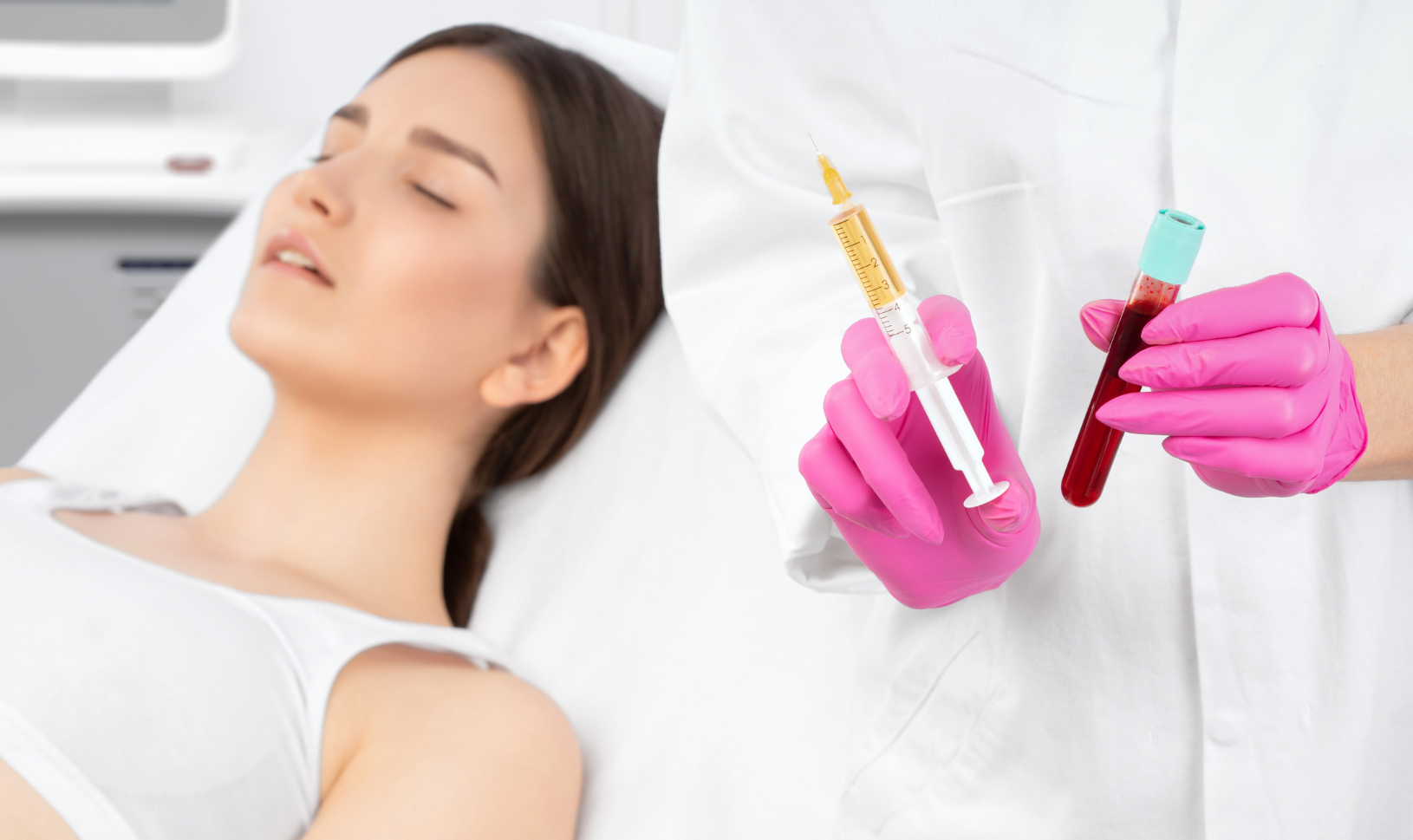
Before the PRP application, a small amount of blood taken from the patient is placed in special tubes and subjected to centrifugation. As a result of this process, the blood is separated into fractions rich in red blood cells, plasma, and platelets.
The platelet-rich plasma obtained is a biological fluid with high healing potential. This fluid supports tissue regeneration by being applied to the targeted area using the appropriate technique. The short and controlled preparation process makes PRP application a practical and effective method.
What are the purposes of PRP applications?
PRP applications can be used as a supportive treatment in many aesthetic and medical fields.
The most common areas of use include:
- Skin rejuvenation and improvement of skin quality
- Hair loss treatments
- Supporting wound healing
- Reducing the appearance of scars and marks
- Accelerating tissue repair after surgery
PRP aims to increase the self-repair capacity of tissues in these areas.
PRP applications in skin rejuvenation
PRP applications for skin rejuvenation contribute to the skin tissue becoming more vibrant, radiant, and elastic thanks to growth factors that stimulate collagen production. This renewal process, which begins in the lower layers of the skin, is reflected on the skin surface over time.
Positive effects can be observed on fine lines, skin tone irregularities, and dull appearance. PRP is a biological approach that aims to repair the skin from within rather than filling it from the outside.
PRP applications for hair loss
PRP applications for hair loss aim to support the cellular activities that nourish hair follicles. Growth factors released from platelets can positively affect the life cycle of hair follicles.
This application can contribute to thicker hair strands, increased hair density, and improved overall scalp quality. PRP is considered a supportive treatment approach for hair loss.
How does the PRP application process work?
Before the PRP application, the targeted area is evaluated and the application site is determined. The prepared platelet-rich plasma is applied to the relevant area with fine injections.
The application time is usually short, and it is often possible to return to daily life after the procedure. The effect of PRP appears over time; tissue regeneration is a gradual process.
Effect and continuity of PRP applications
The effect of PRP applications may vary from person to person. The tissue response varies depending on the person’s age, general health, and the area where the application is performed.
Applications performed at specific intervals can contribute to supporting the results obtained. PRP offers a natural and gradual healing process rather than an immediate change.
Safety and naturalness in PRP applications
One of the most important advantages of PRP is that it is obtained from the person’s own blood. This minimizes the risk of allergic reactions and tissue incompatibility.
The success of the application is closely related to the correct technique, appropriate preparation, and planning suitable for the target tissue. PRP is a biological treatment method that requires medical knowledge and experience.
PRP and its effect on the aging process
PRP treatments aim to support the tissues’ capacity for self-renewal rather than halting the aging process. This approach contributes to the skin and soft tissues achieving a healthier structure over time. Activating natural healing mechanisms supports balanced and harmonious aesthetic results.
Post-PRP process and follow-up
Mild redness or sensitivity may occur after the PRP application; this condition usually subsides within a short time. The effects of the application become apparent over time and are evaluated with regular follow-up. The follow-up process allows the PRP treatment to be planned in the most suitable way for the individual.