


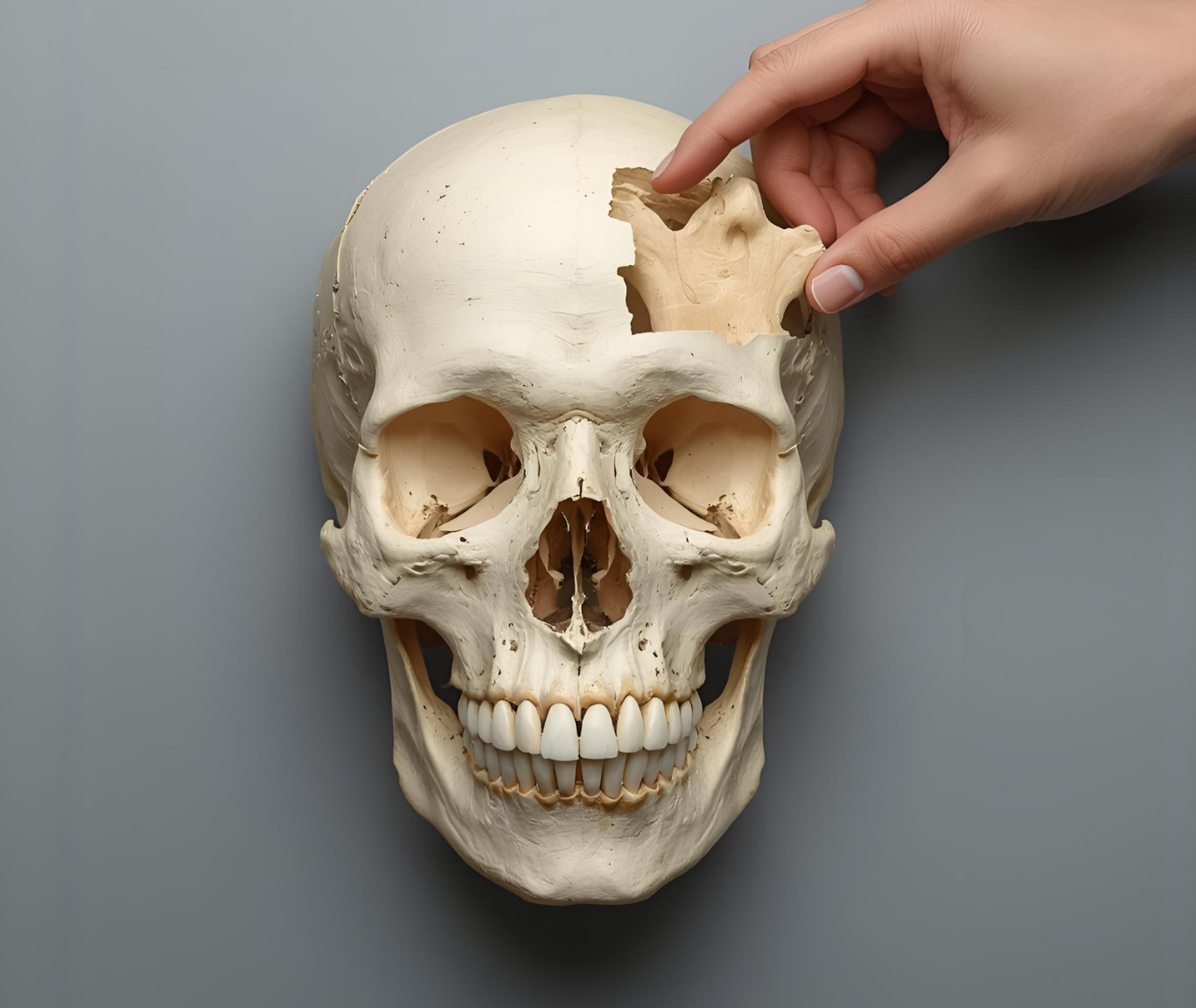
Oncological Reconstruction in Craniofacial Surgery
Oncological reconstruction in craniofacial surgery is an advanced surgical field that aims to repair tissue and structural losses that occur after the surgical removal of benign or malignant tumors located in the face and head region. This process is not limited to simply replacing the lost tissue; it also aims to preserve function, restore facial expression, and ensure that the individual’s relationship with social life continues in a healthy manner.
The face is the center of identity, facial expressions, and communication. The voids created in this area after oncological surgery can lead to complex results, both aesthetically and functionally. Craniofacial reconstruction is a healing process that aims to improve quality of life by reshaping these voids with solutions that respect anatomy, are natural, and provide long-term results.
Characteristics of oncological craniofacial defects
Defects that occur after oncological surgeries are different from trauma-related injuries.
These voids often involve:
- Extensive tissue loss,
- Areas where bone and soft tissue are lost together,
- Tissues exposed to radiotherapy or chemotherapy,
- Areas closely related to vascular structures and nerves.
This makes reconstruction more complex and demanding. Therefore, craniofacial oncological reconstruction requires advanced surgical planning, microsurgical techniques, and a multidisciplinary approach.
Conditions requiring oncological surgery in the craniofacial region
Craniofacial reconstruction is most commonly indicated following the following conditions:
- Intraoral and oropharyngeal tumors
- Maxillary and mandibular tumors
- Orbital tumors
- Nasal, sinus, and skull base tumors
- Extensive facial resections due to skin cancers
The primary goal during the removal of these tumors is to ensure oncological safety. Reconstruction aims to restore function and aesthetic harmony within these safety limits.
The fundamental goals of oncological reconstruction
The fundamental goals of craniofacial oncological reconstruction are multi-layered. These goals include:
- Preservation of respiratory, masticatory, swallowing, and speech functions,
- Support of the eye and orbital structure,
- Restoration of facial symmetry,
- Long-term preservation of tissue integrity,
- Support of the individual’s social and psychological adaptation.
In this context, reconstruction is not a complementary part of treatment; it is an integral continuation of the oncological process.
Methods used in craniofacial oncological reconstruction
1. Local and regional flaps
In small and medium-sized defects, tissue continuity can be achieved using flaps prepared from surrounding tissues. These methods offer effective results, especially in cases of skin and soft tissue loss.
2. Free tissue transfers (microsurgical flaps)
In large and complex defects, bone, muscle, skin, or fat tissue taken from distant areas of the body is transferred to the craniofacial area using microsurgical techniques. Fibula flap, scapula flap, and radial forearm flap are among the commonly used options in this field.
3. Bone-supported reconstructions
Bone-containing flaps are preferred for reconstructing the facial skeleton after maxillary or mandibular resection. This creates a solid foundation for facial contours, chewing function, and dental rehabilitation.
The role of microsurgery in craniofacial oncological reconstruction
Microsurgery is one of the most powerful tools in craniofacial oncological reconstruction. Transferring viable and well-perfused tissue to the defect site accelerates healing, particularly in areas that have undergone radiotherapy, and reduces the risk of complications.
Thanks to microsurgical techniques, more predictable and lasting results are achieved, both functionally and aesthetically. This approach ensures that reconstruction is not merely a repair but a process of rebuilding.
The importance of a multidisciplinary approach
Craniofacial oncological reconstruction requires the simultaneous collaboration of different specialties. Plastic and reconstructive surgeons, ear, nose, and throat specialists, maxillofacial surgeons, neurosurgeons, radiation oncologists, and medical oncology teams work together to develop a comprehensive treatment plan.
This teamwork is one of the most important factors directly affecting both oncological safety and the success of reconstruction.
Recovery process and long-term results
The recovery process may vary depending on the extent of the surgery and the reconstruction method used. Over time, tissues adapt to their new anatomical positions; swelling subsides, facial contours become more defined, and functional capacity increases.
Thanks to microsurgical techniques, more predictable and lasting results are achieved, both functionally and aesthetically. This approach ensures that reconstruction is not merely a repair but a process of rebuilding.