


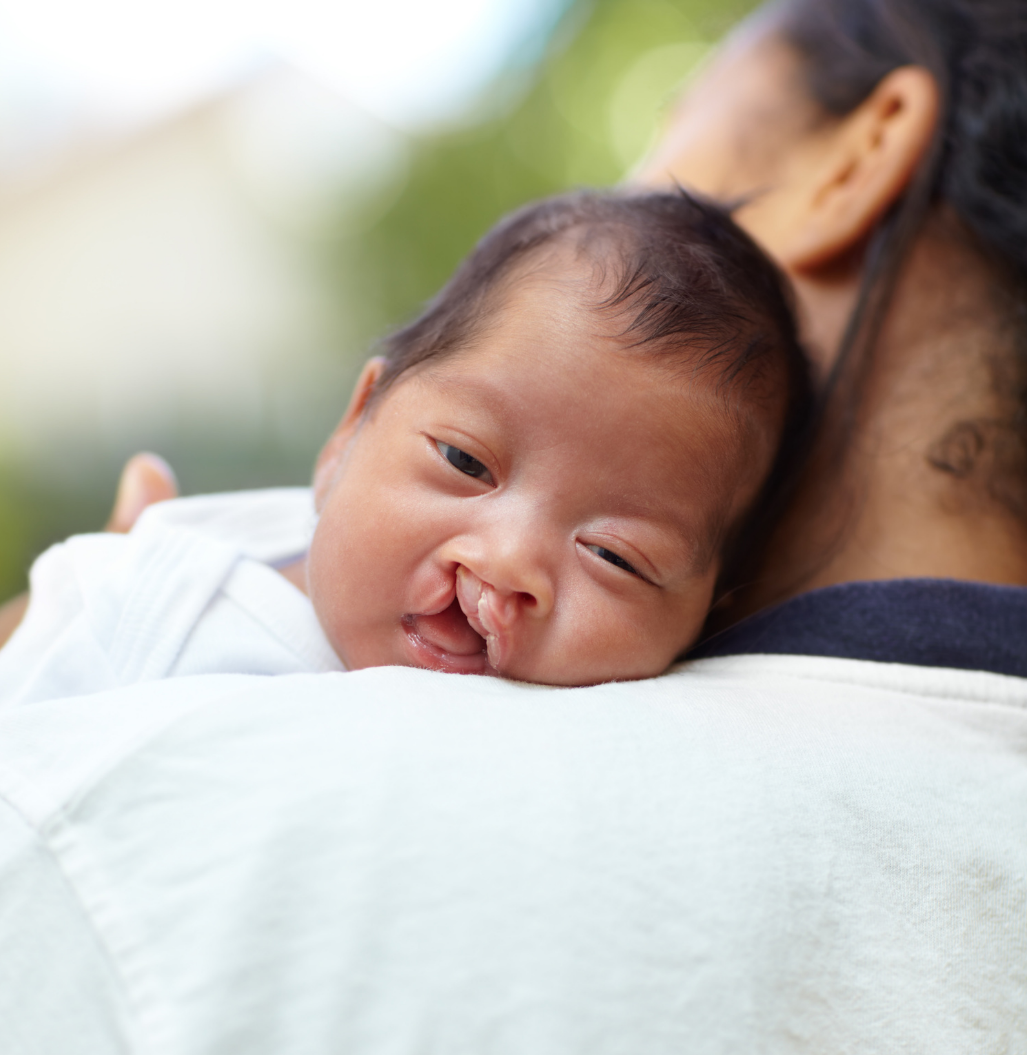
Cleft Palate Repair
Cleft palate repair is the surgical closure of the opening caused by congenital incomplete fusion of the upper palate. This condition, called cleft palate in the medical literature, is an important congenital anomaly that can affect both the nutrition and speech development of babies in the future.
Since the palate is an anatomical structure that separates the oral and nasal cavities, a cleft palate can cause milk to escape into the nose during feeding, ear infections and speech disorders. Cleft palate repair surgery is performed to eliminate these functional problems and to support the child’s healthy growth and social development. The aim is not just to close an opening, but to restore the natural anatomy that supports speech, swallowing and facial development.
Why does cleft palate occur?
Cleft palate usually occurs during the embryonic period of pregnancy when the palatal tissues do not fully fuse in the midline. Genetic factors and environmental factors are generally seen to take place together among the reasons for the occurrence of this condition. Risk factors include family history, maternal smoking or alcohol use during pregnancy, exposure to certain drugs, infections or folic acid deficiency.
However, cleft palate is one of the most common facial congenital anomalies recognized at birth, although in most cases no definitive cause can be identified. Therefore, it is important to inform the families of babies born with cleft palate anomaly that this condition can be encountered without any significant cause. Cleft palate is often recognized during examinations after birth and requires a multidisciplinary treatment plan.
When is cleft palate repair performed?
It is generally recommended to perform cleft palate repair surgery when the baby is 9-18 months old. In this period, both the tissues are sufficiently developed and the repair is provided before speech functions begin. In this way, speech problems in the future are minimized.
In some cases, factors such as the general health of the baby, the type of cleft or additional congenital anomalies may affect the timing of surgery. Surgical planning is usually done in collaboration with teams from plastic surgery, otolaryngology, speech therapy and dentistry. The goal is not just a surgical correction, but a holistic recovery that supports the child’s long-term development.
How is cleft palate repair performed?
The surgery is performed under general anesthesia and takes about 2-3 hours. The muscles, mucosa and soft tissues of the palate are anatomically rearranged to close the opening in the midline. During this procedure, the musculature of the soft palate is carefully repaired, as it is the main structure that provides voice resonance and breath control during speech.
Modern surgical techniques aim to increase the length of the palate, restore muscle function and improve speech quality. In the postoperative period, the child gradually regains normal functions with the support of nutrition and speech therapy. At the same time, it is very important that tooth development is followed by orthodontics from the early postnatal period and checked by ENT physicians for problems such as otitis media.
Recovery process after cleft palate repair
The patient is followed up in the hospital for one day after surgery and discharged the next day. In the first weeks, the baby is fed in liquid or puree consistency in order not to traumatize the surgical area. While avoiding hard and hot foods as much as possible, it is recommended to use a silicone spoon rather than a bottle during feeding. Since the stitches are usually dissolvable, they do not need to be removed.
Paying attention to oral hygiene in the postoperative period and keeping the wound clean accelerates healing. In addition, in the postoperative period, babies should be careful not to take objects such as toys that may injure the surgical field into their mouths, and if necessary, temporarily fixing the arms with bandages will help in this regard.
In the first months, mild swelling of the palate or temporary nasal speech (nasality) may be observed, but these surgical changes improve over time. In children treated for cleft palate, speech therapy (logopedics) is recommended to support speech development in the postoperative period. This support ensures that the surgical success becomes permanent and contributes positively to the social development of the child.
Is revision surgery necessary after cleft palate repair?
In some cases, a second revision surgery may be necessary, especially in cases of large cleft palates or in cases where the muscle function is not strong enough. In addition, a need for revision surgery may also arise if fistulas form in the area where the hard palate and soft palate meet in the postoperative period. Similarly, revision procedures are usually performed in the preschool period to improve speech performance and participation in social life.
Revision surgeries aim to reorganize the length and mobility of the palate and improve voice resonance. In this way, the child gains a healthy speech ability both aesthetically and functionally.
Other procedures that can be combined with cleft palate repair
Cleft palate repair can often be combined with cleft lip repair, rhinoplasty, middle ear ventilation or alveolar bone grafting. These combinations are particularly important for the full restoration of speech function and facial aesthetics.
Such multi-stage planning is usually carried out step by step over the course of the child’s development. The aim is not only to correct the appearance, but also to enable the child to speak clearly, breathe easily and participate in social life with confidence.
The secret to success in cleft palate repair
Successful palate repair is possible with meticulously planned surgery as well as family support, speech therapy and regular follow-up in the postoperative period. Since each child has a different anatomy and a different healing rate, the treatment process is organized and followed individually.
The aim of surgery is to achieve a functional integrity that improves the child’s quality of life rather than an aesthetic improvement. In this way, a child with cleft palate can speak and laugh in the same way as their peers in the following years and continue their life with self-confidence.