


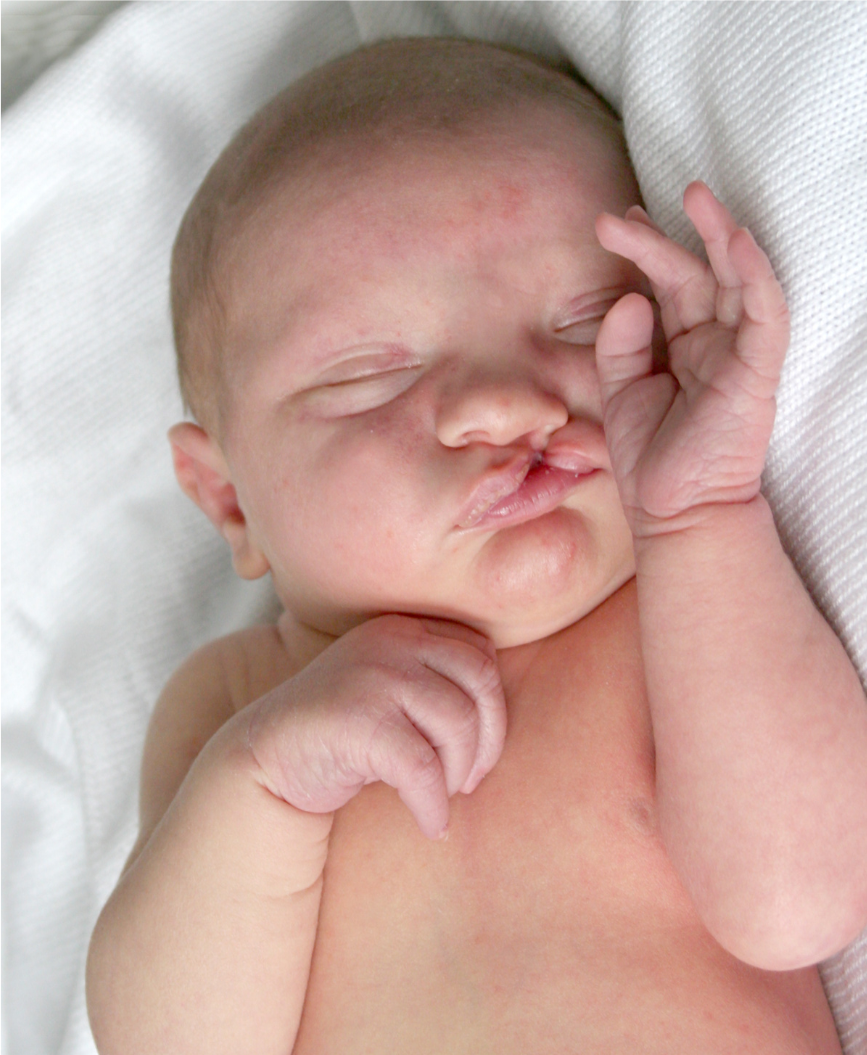
Cleft Lip Repair
Cleft lip repair is a reconstructive surgical procedure that aims to surgically correct congenital lip fusion defects. This condition, medically called cleft lip or cleft lip, occurs when the tissues in the midline of the face do not fully fuse during the embryonic period.
Cleft lip is not only an aesthetic problem; it can also affect functions such as speech, sucking and feeding, tooth development and balanced movement of facial muscles. Therefore, cleft lip repair is an extremely important surgery both functionally and aesthetically. The aim is not only to close a cleft; it is to restore the natural proportions of the face, restore lip function and create aesthetic harmony.
Why does cleft lip occur?
The causes of cleft lip are usually a combination of genetic factors and environmental factors. Infections during pregnancy, the use of certain medications, folic acid deficiency or habits such as smoking can increase the risk. However, in most cases, cleft lip is one of the most common facial congenital anomalies recognized at birth. Therefore, it is important to inform the families of babies born with cleft lip anomaly that this condition can be encountered without any significant cause.
In some babies, the cleft is located only on the upper lip, while in others it may extend to the alveolar or palatal tissues. In addition, some patients may have a cleft only on one side, while others may have a cleft on both sides of the lip. Therefore, each patient is planned according to his/her unique anatomical structure and a personalized surgical approach is applied.
When should cleft lip repair be performed?
Cleft lip repair surgery is usually performed after the baby turns 3 months old, when the general health condition becomes appropriate. Although it is an important factor that the baby is at least 3 months old, it is essential for the surgery to reach the appropriate body weight for anesthesia.
Repair performed in the early stages facilitates wound healing and positively affects the child’s facial development in the future. In some cases, lip repair can be supported by palate repair and nose shaping surgeries in the following years. The aim is to provide a long-term recovery that restores all functions of the face, not only aesthetically.
How is cleft lip repair performed?
The surgery is performed under general anesthesia and takes 1-2 hours on average. The tissue deficiencies at the edge of the lip are reshaped with special incisions; muscles, mucosa and skin layer are anatomically aligned and combined. In this way, both the aesthetic appearance and the function of the lip muscles are restored.
Thanks to modern surgical techniques, the lip contour, the base of the nose and the filtrum line (the natural hollow in the upper lip) are meticulously reconstructed. Postoperative suture scars lose their prominence over time; a natural lip shape and a soft facial expression are achieved.
Recovery after cleft lip repair
In the postoperative period, the baby is usually discharged the next day. Although mild swelling, tenderness and crusting may be seen in the first days, these conditions disappear in a short time. The stitches usually dissolve on their own or are removed within a week.
Feeding is carefully planned – the use of pacifiers or hard bottle nipples is not recommended, as the use of the lip muscles in the early stages can have a negative effect on healing. It is often preferred to feed milk or formula with silicone spoons. In about 2-3 weeks, the wound heals and the lip contour becomes clear. In the long term, speech therapy or orthodontic support (especially in patients with alveolar cleft or cleft palate) may be recommended if necessary for the child’s speech development and gestures.
Aesthetic and functional balance in cleft lip repair
The success of cleft lip repair lies not only in closing the cleft but also in restoring natural lip symmetry and facial balance. Therefore, the operation is an extremely meticulous process that requires plastic reconstructive surgery experience.
The anatomically correct alignment of the lip muscles directly affects the child’s lip movements, smile and speech later in life. The surgeon’s goal is to achieve both functional and aesthetic integrity while preserving the naturalness of the face.
Is revision surgery required after cleft lip repair?
Some patients may develop small asymmetries in the lip or nose area depending on the growth process. In this case, the lip contour or nasal structure can be rearranged with revision surgery, usually during school age.
Thanks to modern surgical techniques, revision rates have decreased, scars are minimal and the aesthetic appearance has become extremely natural. At every step, the aim is to provide a long-term and permanent improvement that supports the child’s facial development.
Other operations that can be combined with cleft lip repair
Cleft lip repair can often be combined with procedures such as palate repair (palatoplasty), nose reshaping (rhinoplasty) or alveolar bone grafting (maxillofacial bone repair). These stages are usually planned according to the child’s developmental stage and require a multidisciplinary approach.
Thanks to this comprehensive planning, both aesthetic appearance and functions such as speech, nutrition and tooth alignment are naturally supported. The result is not only a repaired lip, but a healthy, natural and balanced facial development.
Are the results of cleft lip repair permanent?
Yes, cleft lip repair provides permanent results. There may be minimal changes over time during facial development, but lip contour, musculature and symmetry are usually preserved. In adulthood, scars often lose their prominence completely and facial expression takes on a natural appearance.
This surgery is not only an aesthetic correction; it is a lifelong effective reconstructive intervention that improves the child’s quality of life, self-confidence and social cohesion.