

Autologous Tissue Breast Reconstruction
Breast reconstruction with autologous tissue is the process of reshaping the breast tissue lost after breast cancer treatment using tissues (skin, muscle and fat tissue) taken from the patient’s own body. This method is not only an aesthetic repair, but also an important reconstructive surgery practice that supports women’s body integrity and psychological healing.
Repairs with autologous tissue provide an extremely natural look and feel as they are in complete biological harmony with the body. It is preferred by many patients because it can be performed without the use of implants (silicone prosthesis) and offers permanent results without changing shape over time. This surgery means the reintegration of the body with its own tissue, which represents a profound healing both physically and emotionally.
The importance of breast reconstruction
After breast cancer surgery, for many women the lost breast is not just an organ but a symbol of female identity and bodily integrity. Breast reconstruction is therefore not only an aesthetic correction but also part of a psychological, social and spiritual healing process. It should be known that breast reconstruction, regardless of whether it is repaired with implants or autologous tissue, is a process and that it is possible to achieve the perfect result by progressing patiently.
Reconstructions using autologous tissue provide a more vivid and natural result than implant-based methods with the warmth, softness and naturalness of the tissue. It also contributes to a healthier healing process by increasing tissue durability in patients who have undergone radiotherapy.
From which areas can tissue be harvested?
The most commonly used areas for autologous breast reconstruction are the abdomen (TRAM or DIEP flap), back (Latissimus dorsi muscle-skin flap), thigh (TMG or PAP flap) and buttocks (SGAP or IGAP flap). Skin, muscle and adipose tissue taken from these areas are transported to the breast area with microsurgical techniques and reshaped here.
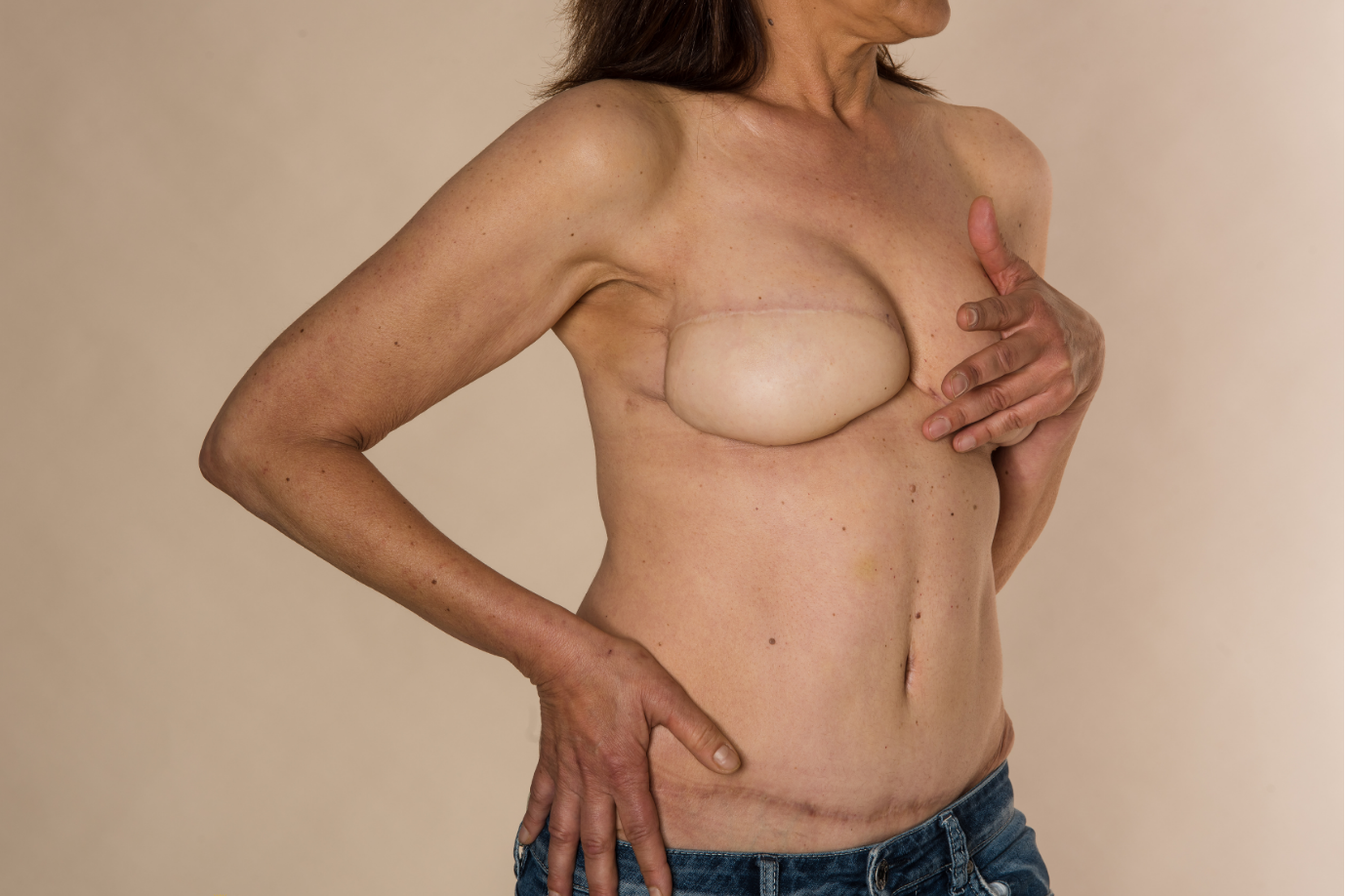
The DIEP (Deep Inferior Epigastric Perforator) flap method allows the reconstruction of breast tissue using the skin and fat tissue of the abdominal region. It is the gold standard method in breast reconstruction with autologous tissue and since it causes minimal damage to the muscle tissue in the abdominal region compared to the old techniques, it does not disturb the comfort of the patients in the long term after surgery. At the same time, one of the numerous advantages of this technique is the efficient use of the tissue accumulated under the navel in the abdominal region and intended to be removed in the tummy tuck operation. In this way, both an aesthetic thinning of the abdominal area is achieved and the breast tissue is reconstructed in its natural softness. This method is recognized as one of the most modern and function-preserving breast reconstruction techniques today.
How is breast reconstruction with autologous tissue performed?
The operation is based on microsurgical principles and is performed under general anesthesia. Tissue from a designated area (e.g. the abdomen or thigh) is transferred to the breast area and connected to the vessels there with fine sutures under a microscope. This is critical for the new tissue to remain viable.
Once the tissue is in place, the breast shape is meticulously shaped and, if necessary, correction procedures can be applied to the opposite breast to ensure symmetry. The aim at this stage is not only to add volume, but also to achieve a natural form, contour and softness. In the first stage, although the aim seems to be to ensure that the tissue lives in the area where it is transferred, we try to achieve as symmetrical an appearance as possible. However, since changes in the shape of the tissue occur especially after oncological treatments such as radiotherapy, fat injection, nipple creation and asymmetry correction to the opposite breast can be added with additional sessions.
Recovery process and results
In the postoperative period, hospitalization is required for 5-7 days to closely monitor the blood circulation of the transferred tissue. Patients can usually return to their daily lives within a few weeks. Although the healing process varies from person to person, the edema decreases within a few months and the final shape of the breast becomes clear.
Reconstructions with autologous tissue provide permanent results that are fully integrated with the body. The natural adaptation of the tissue to weight changes over time contributes to an extremely natural appearance in the long term. For this reason, many patients receive more satisfactory aesthetic and emotional results than with implants.
In the breast reconstruction process, it is important for patients to be patient in order to make the result close to perfection. It should be known that additional supportive procedures may be needed to achieve the maximum achievable aesthetic appearance.
Who is suitable for breast reconstruction with autologous tissue?
This method is usually decided after comparing the pros and cons with implant-based methods, taking into account the wishes and expectations of the patients. First of all, it should be known that this method is preferred in patients with sufficient body tissue and general health status. Since reconstruction with autologous tissue requires more extensive and longer surgeries than implant-based methods, it is important to consider the comorbidities and general condition of the patients. Apart from this
1- Especially people who have undergone mastectomy operation before and have not undergone breast reconstruction are preferred because the subcutaneous tissue in that area does not allow options such as implants. If radiotherapy treatment is added, then the skin in the breast area will be insufficient in terms of quality and elasticity, and the autologous tissue transferred will benefit both in terms of appearance and tissue quality.
2- Reconstruction with DIEP flap is known as the ideal option for people who are mastectomy candidates due to breast cancer and who are also uncomfortable with excess tissue in the abdominal area.
3- In addition, people who have had unsuccessful reconstruction experiences with implants are also preferred to be repaired with the use of own tissue.
4- This method is among the ideal options for patients who do not want to carry a foreign body such as an implant in their body for any reason and who want to regain the natural appearance of the breast in the long term.
Since every woman’s body structure and healing process is different, the main goal is to reveal the patient’s needs and design a personalized reconstruction plan in the light of realistic expectations.
Advantages of reconstruction with autologous tissue
- Natural tissue feel and appearance: Reconstruction with autologous tissue offers a much more natural result than implants.
- Permanent results: Since the tissue is integrated with the body, the risk of deformation over time is low and adapts to weight and aging changes in the body.
- Resilience after radiotherapy: Since this method transfers newly blood supplying tissue, it provides better recovery in skin that has undergone radiotherapy and has poor nutrition and elasticity.
- Improvement in body contour: Tissue harvested especially from the abdomen or buttocks also creates an aesthetic slimming effect in these areas.
These advantages make autologous reconstruction not only a repair but also a surgery of rebirth.
Things to consider after breast reconstruction with autologous tissue
Rest, wound care and attention to nutrition in the postoperative period accelerate healing. Heavy exercises should be avoided in the first weeks to protect the circulation of the tissue. The controls recommended by the surgeon should be performed without interruption; the wound line and symmetry should be evaluated regularly. Limiting smoking both before and after surgery is of vital importance in this operation as in microsurgical methods. Since tissue is removed from the abdomen after repair with DIEP flap, the use of an abdominal corset for up to 6 weeks will be supportive during healing.
In the long term, the tissue shape adapts naturally with the body. The patient’s biggest gain in this process is to feel complete and strong again. Because breast reconstruction is not only a physical repair, it is a self-confidence surgery that touches the woman’s life again.